Sunday, February 27, 2011
Brief Blog Hiatus
I am out of the country for work for most of March, so the blog will be on a brief hiatus! Back in April with more posts.


Garlic Cloves Confit
February Theme: Indulgence.

I'm packing to go on a work trip, so this will be short! And simple: garlic slow-cooked in olive oil-- and that is the whole recipe. And yet, this dish is really something in-and-of itself. Plus, it's very indulgent: it doesn't even really fit into any one meal, so you basically need to let yourself have an appetizer or snack of this in between your normal meals. Even though the flavor relies on just garlic, because of the way it's prepared, the flavor is unique. The garlic is slow-cooked to the point of being as spreadable as butter, and the flavor is earthy and rich. It's great alone on baguette, or added to a sandwich.


Garlic Cloves Confit
1/2 C peeled garlic cloves
About 1/2 C olive oil
Put garlic into a small heavy saucepan and add enough olive oil to cover garlic. Bring just to a simmer, reduce heat, and cook at a bare simmer until garlic is tender, about 25 minutes. Let garlic cool in oil.
The garlic keeps, in the oil, for up for two weeks, covered and refrigerated.

I'm packing to go on a work trip, so this will be short! And simple: garlic slow-cooked in olive oil-- and that is the whole recipe. And yet, this dish is really something in-and-of itself. Plus, it's very indulgent: it doesn't even really fit into any one meal, so you basically need to let yourself have an appetizer or snack of this in between your normal meals. Even though the flavor relies on just garlic, because of the way it's prepared, the flavor is unique. The garlic is slow-cooked to the point of being as spreadable as butter, and the flavor is earthy and rich. It's great alone on baguette, or added to a sandwich.


Garlic Cloves Confit
1/2 C peeled garlic cloves
About 1/2 C olive oil
Put garlic into a small heavy saucepan and add enough olive oil to cover garlic. Bring just to a simmer, reduce heat, and cook at a bare simmer until garlic is tender, about 25 minutes. Let garlic cool in oil.
The garlic keeps, in the oil, for up for two weeks, covered and refrigerated.
Monday, February 14, 2011
Gingerbread with Cheesecake Layer
February Theme: Indulgence.

I'm taking a little break from the policy theme (which I attempt to connect my recipes to, however tangentially) for the month of February to focus on a very important quality of food: richness.

I love gingerbread, and this recipe allows you to eat it in soft, brownie-esqe form. To up the richness ante, these have a layer of cream cheese in the middle, which actually ends up seeming very crucial as it counter-balances the spiciness of the gingerbread. Delicious.

One note: the recipe calls for very hot water of 190 degrees F; I didn't take the temperature of the water I used, but microwaved it to about the temperature that you would for tea.
Gingerbread with Cheesecake Layer
Serves 6 to 8
Slightly adapted from The Splendid Table
Cheesecake Mixture
1 egg
4 ounces cream cheese
1/4 C sugar
2 t lemon juice
1/2 t vanilla extract
Gingerbread
2 C less 2 T unbleached all-purpose flour
1 t baking soda
Generous 1/2 t salt
1 T ground ginger
3/4 t ground cinnamon
1/4 t ground cloves
1/4 t cardamom
6 T unsalted butter, melted
3/4 C dark molasses
3/4 C very hot water (190 degrees F)
1/3 C packed dark brown sugar
1 large egg
1. Before starting the gingerbread, make the cheese mixture. Beat together the egg, cream cheese, sugar, lemon juice, and vanilla. Set aside.
2. Preheat the oven to 350°F. Butter and flour an 8-inch square light-colored metal or ceramic baking pan.
3. Make the gingerbread. In a medium bowl, whisk together the flour, baking soda, salt, ginger, cinnamon, cloves, and cardamom. In a large mixing bowl, beat together the butter, molasses, hot water, and brown sugar. When the mixture is almost frothy, beat in the egg, and gradually add the flour blend. Stir until thoroughly blended, but no more.
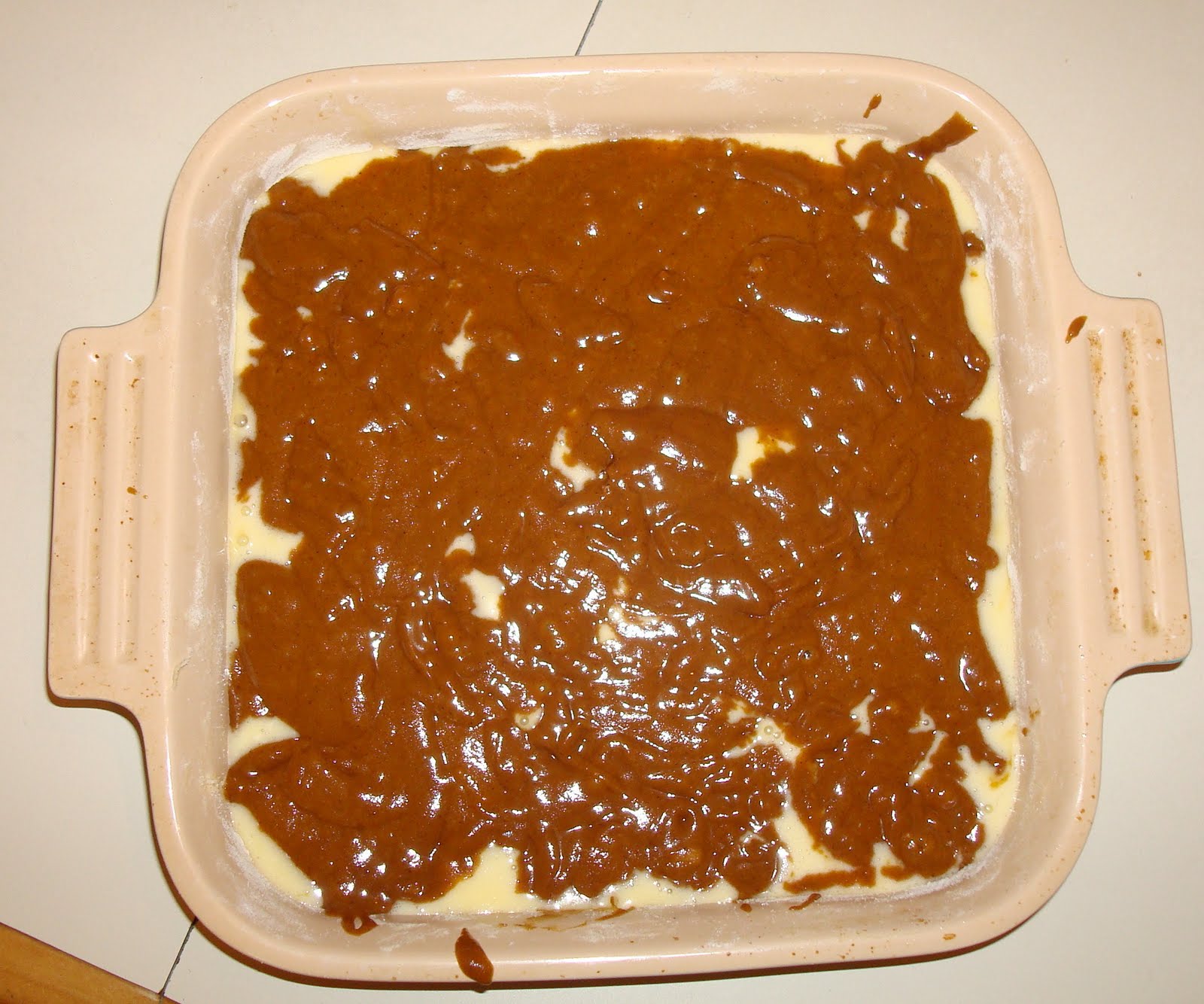
4. Pour half of the gingerbread batter into the pan. Drop spoonfuls of the cheese mixture over the batter. Then cover with the remaining gingerbread mix. Bake for 35 minutes, or until a tester inserted in the center of the cake comes out clean.
5. For a moist gingerbread, cool it in the pan on a wire rack. For a drier consistency, cool the gingerbread in the pan for 10 minutes; then turn it out of the pan and set it on the rack to cool.

I'm taking a little break from the policy theme (which I attempt to connect my recipes to, however tangentially) for the month of February to focus on a very important quality of food: richness.

I love gingerbread, and this recipe allows you to eat it in soft, brownie-esqe form. To up the richness ante, these have a layer of cream cheese in the middle, which actually ends up seeming very crucial as it counter-balances the spiciness of the gingerbread. Delicious.
One note: the recipe calls for very hot water of 190 degrees F; I didn't take the temperature of the water I used, but microwaved it to about the temperature that you would for tea.
Gingerbread with Cheesecake Layer
Serves 6 to 8
Slightly adapted from The Splendid Table
Cheesecake Mixture
1 egg
4 ounces cream cheese
1/4 C sugar
2 t lemon juice
1/2 t vanilla extract
Gingerbread
2 C less 2 T unbleached all-purpose flour
1 t baking soda
Generous 1/2 t salt
1 T ground ginger
3/4 t ground cinnamon
1/4 t ground cloves
1/4 t cardamom
6 T unsalted butter, melted
3/4 C dark molasses
3/4 C very hot water (190 degrees F)
1/3 C packed dark brown sugar
1 large egg
1. Before starting the gingerbread, make the cheese mixture. Beat together the egg, cream cheese, sugar, lemon juice, and vanilla. Set aside.
2. Preheat the oven to 350°F. Butter and flour an 8-inch square light-colored metal or ceramic baking pan.
3. Make the gingerbread. In a medium bowl, whisk together the flour, baking soda, salt, ginger, cinnamon, cloves, and cardamom. In a large mixing bowl, beat together the butter, molasses, hot water, and brown sugar. When the mixture is almost frothy, beat in the egg, and gradually add the flour blend. Stir until thoroughly blended, but no more.
4. Pour half of the gingerbread batter into the pan. Drop spoonfuls of the cheese mixture over the batter. Then cover with the remaining gingerbread mix. Bake for 35 minutes, or until a tester inserted in the center of the cake comes out clean.
5. For a moist gingerbread, cool it in the pan on a wire rack. For a drier consistency, cool the gingerbread in the pan for 10 minutes; then turn it out of the pan and set it on the rack to cool.
Tuesday, February 1, 2011
Slow-Cooked White Bean Gratin
[Belated] January Theme: Making Beans, an Efficient Energy Source, Taste Richer Than They Really Are

Upon ringing in 2011 I had lots of new thoughts about the blog; about new recipes to try, and about how to integrate the recipes better with the food policy ideas... and then somehow the whole month of January went by. Mostly somehow sucked up by work. But, moving on. What I want to try to do is have changing umbrella themes or topics that the recipes fall under, and change it month to month.
So even though January is actually over as of today, I DID actually make something to fit into the new plan this month, I'm just super late in posting it, and so am going to pretend it's not quite February yet.


My idea for January was to do some really simple recipes to go along with the clean-slate feeling of a new year, and also tie this back to a past post about the environmental effects of eating meat by showing some satisfying, interesting recipes with one of the most efficient forms of protein that you can use: beans. Plus, beans seem like a good ingredient to use at the start of a new year, when lots of people are resolving to spend less money, because they are so cheap, but can be really good when played-up.
But beans can seem kind of boring. I tried to get around that with this recipe, which requires slow-cooking the beans to make them tender and more flavorful than usual, and then putting them in a gratin, which makes the white beans taste surprisingly rich, and like a dish in and of themselves.


Slow-Cooked White Bean Gratin
Adapted from Gourmet
1 pound (2.5 C) dried white beans
4 cups onions, chopped
5-6 cloves garlic, peeled
2-3 sprigs rosemary
10 C water
1 bay leaf
1 T salt
2 carrots, diced
1 T olive oil
3 t white wine vinegar
1 T garlic cloves, minced
salt and pepper to season
1 C bread crumbs (I used whole wheat)
1/2 C Parmesan cheese, shredded
1 C Gruyere cheese, grated
1. Put beans, water, rosemary, bay leaf, and garlic in 5-quart heavy pot. Cover and slowly bring to a simmer over low heat, which will take about one hour. Then simmer beans until tender but not mushy, about 35-45 minutes. Remove from heat and let cool, covered, for about 15 minutes.
2. Drain almost all cooking liquid from beans but while reserving cooking liquid. Discard rosemary sprigs and bay leaf and mash any intact garlic cloves into beans. Add salt.
3. In a saute pan, use 1 T olive oil and saute chopped onions, garlic, and carrots for 10-15 minutes, until tender.
4. Combine 1 C of cooked beans, 1.5 C of left-over cooking liquid, 1 T olive oil, white wine vinegar, and salt to taste in a blender or food processor and puree. In large bowl, stir puree into remaining whole beans, and then add in onions, garlic, and carrot mixture. Pour mixture into 3-quart baking dish or other shallow baking dish.
5. In small bowl, mix together bread crumbs, Gruyere, and Parmesan, and sprinkle over gratin. Bake gratin at 425 degrees F until top is browned, about 20 minutes.

Upon ringing in 2011 I had lots of new thoughts about the blog; about new recipes to try, and about how to integrate the recipes better with the food policy ideas... and then somehow the whole month of January went by. Mostly somehow sucked up by work. But, moving on. What I want to try to do is have changing umbrella themes or topics that the recipes fall under, and change it month to month.
So even though January is actually over as of today, I DID actually make something to fit into the new plan this month, I'm just super late in posting it, and so am going to pretend it's not quite February yet.


My idea for January was to do some really simple recipes to go along with the clean-slate feeling of a new year, and also tie this back to a past post about the environmental effects of eating meat by showing some satisfying, interesting recipes with one of the most efficient forms of protein that you can use: beans. Plus, beans seem like a good ingredient to use at the start of a new year, when lots of people are resolving to spend less money, because they are so cheap, but can be really good when played-up.
But beans can seem kind of boring. I tried to get around that with this recipe, which requires slow-cooking the beans to make them tender and more flavorful than usual, and then putting them in a gratin, which makes the white beans taste surprisingly rich, and like a dish in and of themselves.


Slow-Cooked White Bean Gratin
Adapted from Gourmet
1 pound (2.5 C) dried white beans
4 cups onions, chopped
5-6 cloves garlic, peeled
2-3 sprigs rosemary
10 C water
1 bay leaf
1 T salt
2 carrots, diced
1 T olive oil
3 t white wine vinegar
1 T garlic cloves, minced
salt and pepper to season
1 C bread crumbs (I used whole wheat)
1/2 C Parmesan cheese, shredded
1 C Gruyere cheese, grated
1. Put beans, water, rosemary, bay leaf, and garlic in 5-quart heavy pot. Cover and slowly bring to a simmer over low heat, which will take about one hour. Then simmer beans until tender but not mushy, about 35-45 minutes. Remove from heat and let cool, covered, for about 15 minutes.
2. Drain almost all cooking liquid from beans but while reserving cooking liquid. Discard rosemary sprigs and bay leaf and mash any intact garlic cloves into beans. Add salt.
3. In a saute pan, use 1 T olive oil and saute chopped onions, garlic, and carrots for 10-15 minutes, until tender.
4. Combine 1 C of cooked beans, 1.5 C of left-over cooking liquid, 1 T olive oil, white wine vinegar, and salt to taste in a blender or food processor and puree. In large bowl, stir puree into remaining whole beans, and then add in onions, garlic, and carrot mixture. Pour mixture into 3-quart baking dish or other shallow baking dish.
5. In small bowl, mix together bread crumbs, Gruyere, and Parmesan, and sprinkle over gratin. Bake gratin at 425 degrees F until top is browned, about 20 minutes.
Wednesday, December 22, 2010
Lime Macaroons Dipped in Dark Chocolate

You can't get something much richer than a macroon dipped in dark chocolate. So I was trying to think of a way to add a different flavor to all of the sweetness and richness. What I came up with is this recipe for macaroons with lime, still with the dark chocolate. And they're good! They're also kind of interesting as a holiday cookie, because lime is a tropical or summer flavor, but it's kind of nice to each something zesty this time of year.

Macaroons are pretty straight-forward and easy to make. I did have a couple of issues with this recipe, though. For one, I had one baking sheet of cookies on the bottom rack of the oven, and those burnt. So try and put both baking sheets on the top rack of the oven, or back in two batches. I also didn't use cooling racks and left the cookies to cool on the baking sheets, and they ended up getting a little stuck to the pans. So definitely put them on racks when you take them out of the oven.


Happy Holidays!
Lime Macaroons Dipped in Dark Chocolate
Makes about two dozen
1 egg
2/3 C sugar
1 t vanilla extract
2 1/2 C sweetened shredded coconut
1 T lime zest
juice of 1 lime
approx. 1 4-ounce bar of dark chocolate
1. Preheat oven to 350 F. Line baking sheets with parchment paper or grease.
2. In bowl, wisk egg and beat until light. Gradually beat in the sugar, vanilla, lime zest, and lime juice. Continue beating until light and fluffy. Fold in the coconut.
3. Drop batter by heaping teaspoons onto the baking sheets, making mounds and spacing about 1.5 inches apart.
4. Bake for 12-15 minutes on top rack of oven. Turn off heat and let cookies dry in the oven for 10 minutes. Transfer to racks to cool. The insides should be soft while outsides crisp.
5. Melt chocolate in microwave or on stove top. Once macaroons are cool, dip the flat part of each in chocolate and transfer to waxed paper. After dipping all macaroons, refrigerate until chocolate has hardened.
Saturday, November 27, 2010
Sweet Potato, Cardamom & Coconut Spread

Whether or not I've cooked with cardamom before, which I'm having trouble remembering, I did learn this while cooking this recipe: it smells amazing while it's cooking. Spicy and sweet and somehow really woodsy-smelling, it kind of made me want to cook up just milk and cardamom for the smell in my apartment, especially now that it's cold and dark outside.
So I was already really into the recipe because of the smell, but I'd say that the taste lived up to it. It kind of tastes like pumpkin pie in a spread, but with the uniqueness of the cardamom and coconut.
One thing about it is that it's pretty sweet, so it tastes much better with something savory that cuts the sweetness somewhat, such as goat cheese. You can combine those on baguette.
Another idea: all week, I've been eating it with peanut butter in a sandwich for lunch at work. It's really good.


Sweet Potato & Coconut Spread
2 pounds of sweet potatoes
2 C milk
1 C white sugar
1/2 C dark brown sugar
1 cinnamon stick
1.5 t vanilla extract
3/4 t ground cardamom
1 C dried unsweetened coconut
1. Peel the sweet potatoes and cut into small pieces, about 1-inch or less to a side. Put in a large, heavy pan over medium heat. Add the milk, sugars, cinnamon, vanilla, and cardamom.
2. Cook over medium heat until the sweet potatoes are soft and tender. Keep an eye on it, as the milk foams up. After the milk comes to a simmer, it will be about 15 minutes before the sweet potatoes are soft. Once the sweet potatoes are soft and tender, mash them into a pulp with a potato masher. Stir well as you do this.
3. Keep the heat on medium and continue simmer, stirring frequently. When the mixture is reduces and thick like a jam, remove from heat. Keep a close eye on it so it doesn't burn as the milk reduces. This takes between 20 and 30 minutes. Stir in the coconut and let cool before serving. Store in refrigerator.
**Try with goat cheese on bread or crackers.
Monday, November 15, 2010
Orange, Walnut & Feta Beet Salad
I've been moving over the past week, which has meant that my kitchen has been in upheaval, and I haven't been able to really cook. And after several nights of take-out or eating whatever is easy to find in the boxes, and feeling generally a little under-the-weather, I feel a little off. Which is how I knew: it was time for beets.

Because beets are what you need when you have that hard-to-put-your-finger-on-it feeling that you're not getting quite what you need food-wise. When fruits and vegetables start to seem even more delicious because you haven't had enough of them lately, or when you feel like you're losing touch with the more natural and earthy foods.
The fact that this salad mixes oranges in with the beets makes the salad taste even fresher, and the roasted walnuts add a great nutty flavor.
I'm also including the method I've been using to cook beets of late, which I think works really well. It involves cooking them with the skin on, and then removing it after you've roasted them, when it's much easier to remove.

Orange, Walnut & Feta Beet Salad
3 medium/large beets
2 T shallots, chopped
3 T olive oil
1.5 T apple cider vinegar
1 T fresh orange zest
1 orange, peeled and sections sliced
1/2 chopped walnuts
1/2 crumbled feta cheese
salt and pepper
1. Roast beets according to the following method:
Cut stems off of beets, and slice each in half. Lay sliced side down in baking pan. Add about 1/4-inch of water to bottom of pan, and cover with tightly with tin foil. Cook at 400F for about 50 minutes, or until beets are tender. (Watch out for steam escaping from the foil when checking on beets.) Let beets cool, and then run under running water while peeling/pushing skin off. It should slide off fairly easily.
2. When beets are almost done, put walnuts in a small baking dish with a bit of olive oil. Bake for 8-10 minutes at 400F, until toasted.
3. Make salad dressing: in small bowl, mix together chopped shallots, orange zest, olive oil, apple cider vinegar, and salt and pepper to taste.
4. Once walnuts are done, let cool for a few minutes. Let beets cool, and then slice into medium-sized chunks. Mix beets, dressing, walnuts, and chopped orange in bowl. Before serving, add feta cheese.

Because beets are what you need when you have that hard-to-put-your-finger-on-it feeling that you're not getting quite what you need food-wise. When fruits and vegetables start to seem even more delicious because you haven't had enough of them lately, or when you feel like you're losing touch with the more natural and earthy foods.
The fact that this salad mixes oranges in with the beets makes the salad taste even fresher, and the roasted walnuts add a great nutty flavor.
I'm also including the method I've been using to cook beets of late, which I think works really well. It involves cooking them with the skin on, and then removing it after you've roasted them, when it's much easier to remove.

Orange, Walnut & Feta Beet Salad
3 medium/large beets
2 T shallots, chopped
3 T olive oil
1.5 T apple cider vinegar
1 T fresh orange zest
1 orange, peeled and sections sliced
1/2 chopped walnuts
1/2 crumbled feta cheese
salt and pepper
1. Roast beets according to the following method:
Cut stems off of beets, and slice each in half. Lay sliced side down in baking pan. Add about 1/4-inch of water to bottom of pan, and cover with tightly with tin foil. Cook at 400F for about 50 minutes, or until beets are tender. (Watch out for steam escaping from the foil when checking on beets.) Let beets cool, and then run under running water while peeling/pushing skin off. It should slide off fairly easily.
2. When beets are almost done, put walnuts in a small baking dish with a bit of olive oil. Bake for 8-10 minutes at 400F, until toasted.
3. Make salad dressing: in small bowl, mix together chopped shallots, orange zest, olive oil, apple cider vinegar, and salt and pepper to taste.
4. Once walnuts are done, let cool for a few minutes. Let beets cool, and then slice into medium-sized chunks. Mix beets, dressing, walnuts, and chopped orange in bowl. Before serving, add feta cheese.
Subscribe to:
Posts (Atom)